Sehen wer wir sein (s|w)ollten
↳ Robin Kötzle
DE 2025, 08:03:00
Two-channel video installation
Robin Kötzle’s two-channel video installation Sehen, wer wir sein (s|w)ollten examines the constitution of the public realm within the media based on protests in East and West Germany between 1952 and 1991. The work’s starting point is the question of forms of political assembly and participation beyond parliamentary processes – and how such collective articulations are formed in public images. The focus here is the role of mass media: how do assemblies become relevant events in society in the act of their being reported on and which institutional mechanisms structure perception, evaluation and recollection?
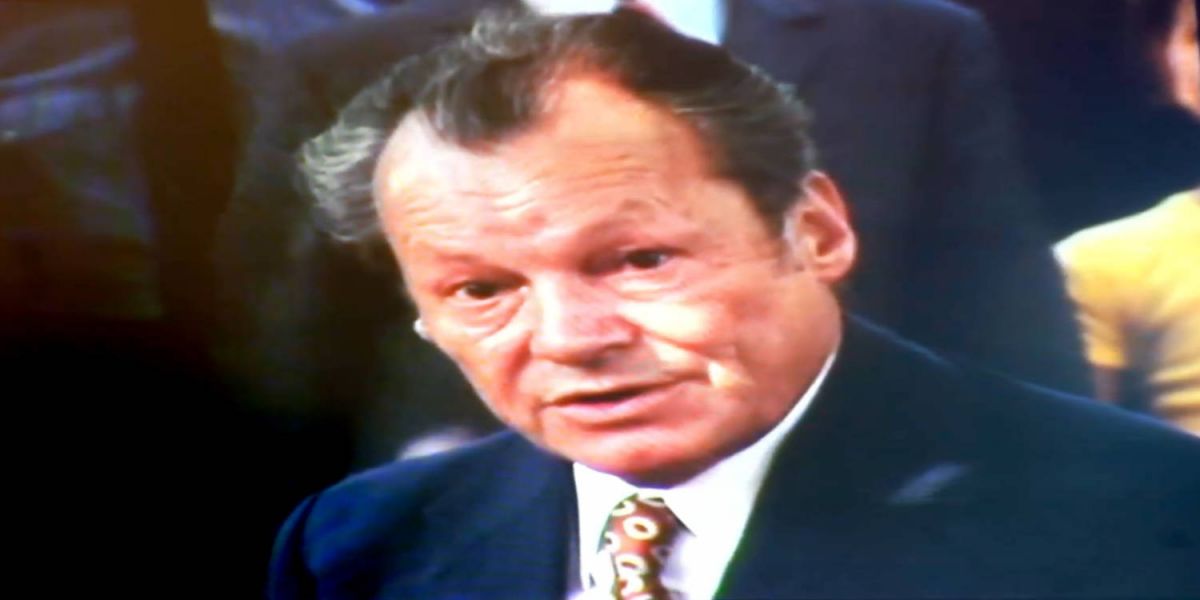
The installation confronts the perspectives of the East German news programme Aktuelle Kamera and its West German equivalent Tagesschau. Both channels run in sync, with each showing reports of the same day. If a protest is not mentioned in the respective other system, the screen remains black. This formal decision allows absence to be seen and experienced: it’s not just what’s shown, but also what’s left out which marks the collective image of reality. The visible appears here as the result of editorial selection, linguistic codification and political framing.
The work is based on comprehensive research on protests in Germany, including the data of the social sciences research project PRODAT, which documents protests between 1950 and 2002. Starting from around two hundred selected events, the corresponding news programmes were then examined in the television archive. The synchronisation of the materials creates a dual media set-up: two politically separated systems observe and comment on what are partially the same events – albeit from different ideological and journalistic perspectives.
The contrast allows differences in the dramatic structure of the image, montage, the way commentaries are conducted and the choice of terms to emerge. Depending on the context, protests appear as a legitimate democratic practice, a disturbance of public order or a ideologically motivated deviation. Historical shifts become visible at the same time: while in the early years, protest is often framed as marginal or a danger to the state, it increasingly establishes itself in West Germany as a legitimate form of political articulation, while it appears in East Germany more strongly as an omen of state control.
By synchronising presence and absence, the installation allows media reporting itself to be experienced as a form of institutional assembly – as an ordering principle for images, voices and events that sets out which collective appearances become visible, which interpretations are stabilised and which forms of political articulation drop out of the shared picture.
The television footage used comes from the holdings of Deutsches Rundfunkarchiv (DRA) and Norddeutscher Rundfunk (NDR).
- Sektion Section: An Incomplete Assembly
- Programm Programme: An Incomplete Assembly